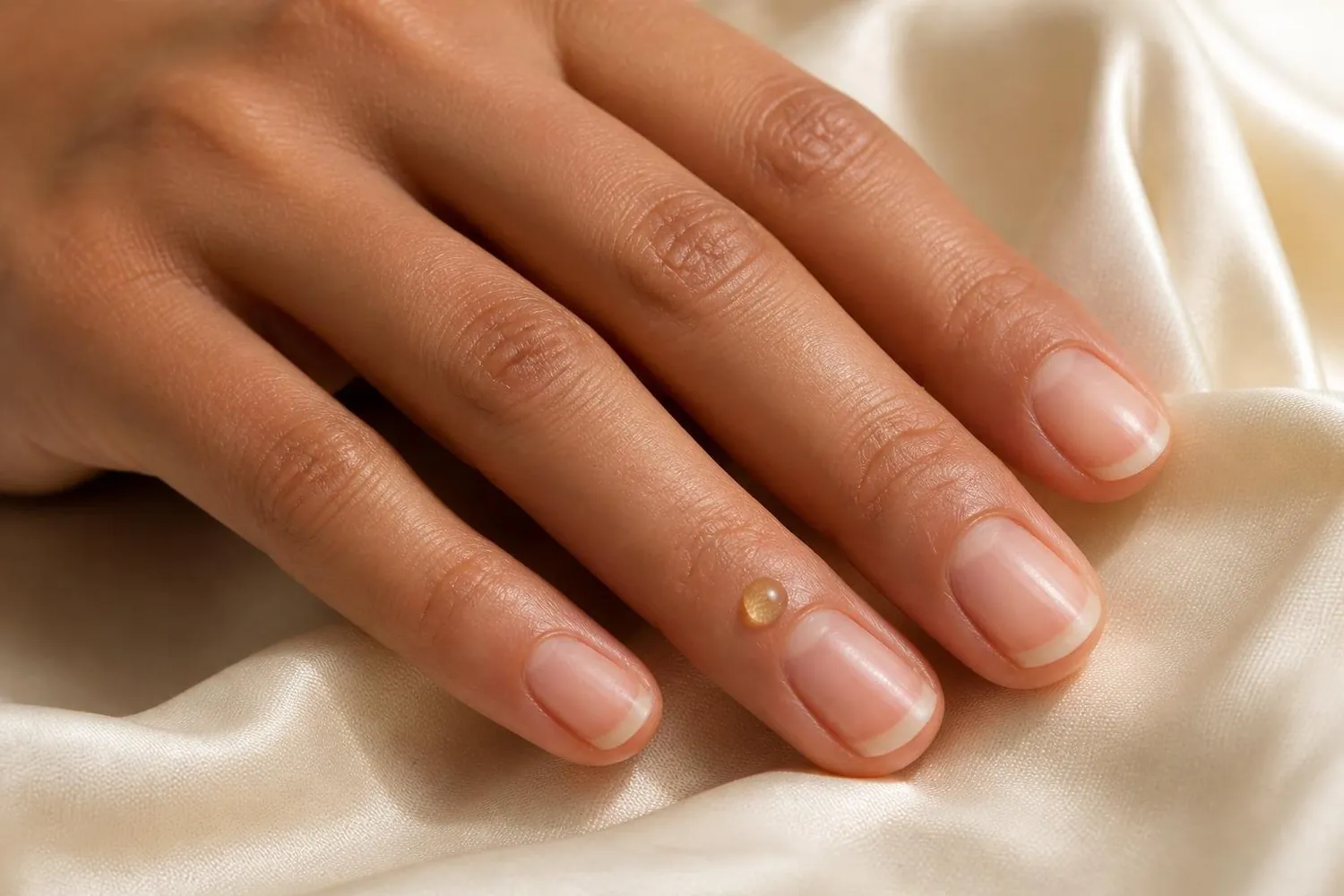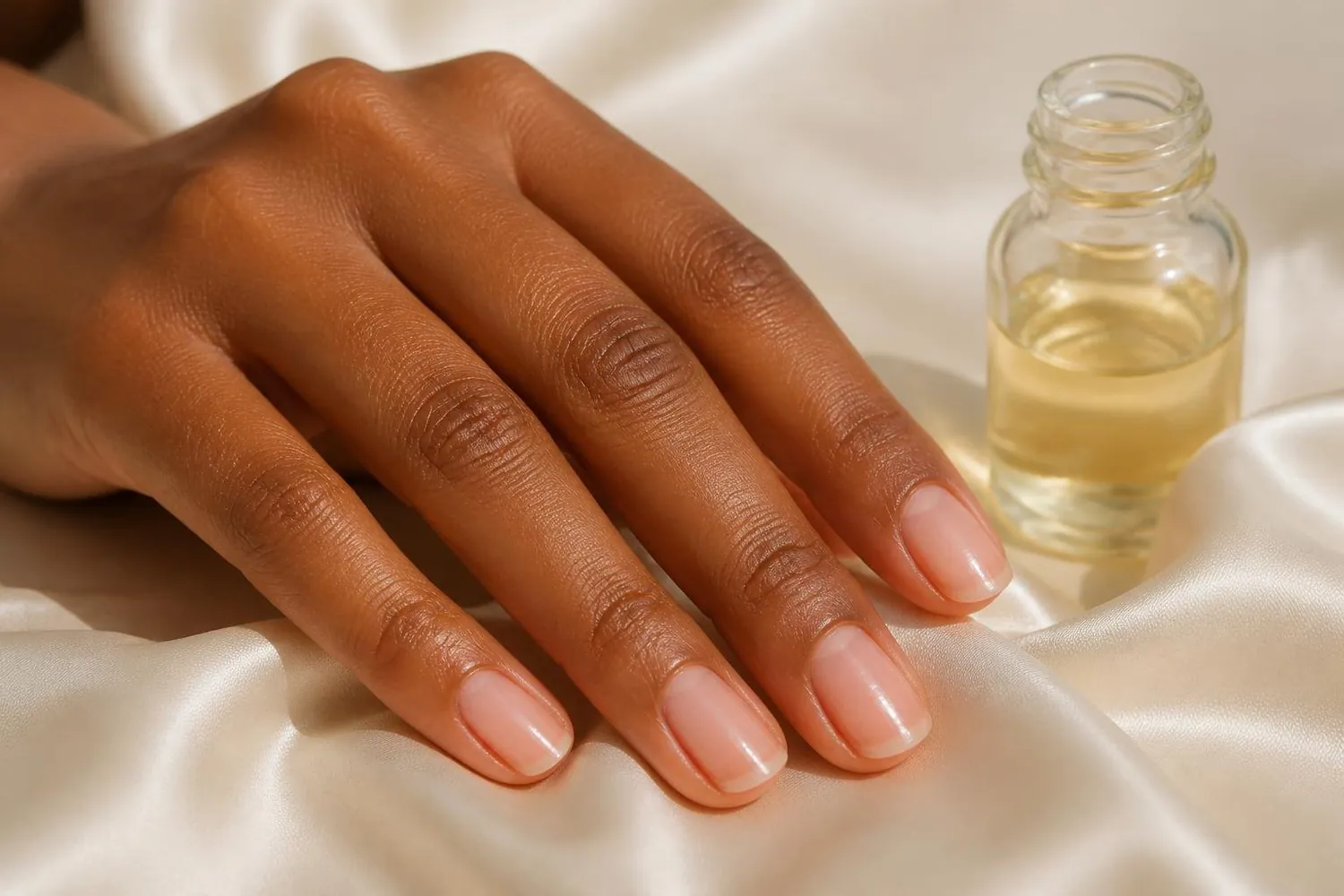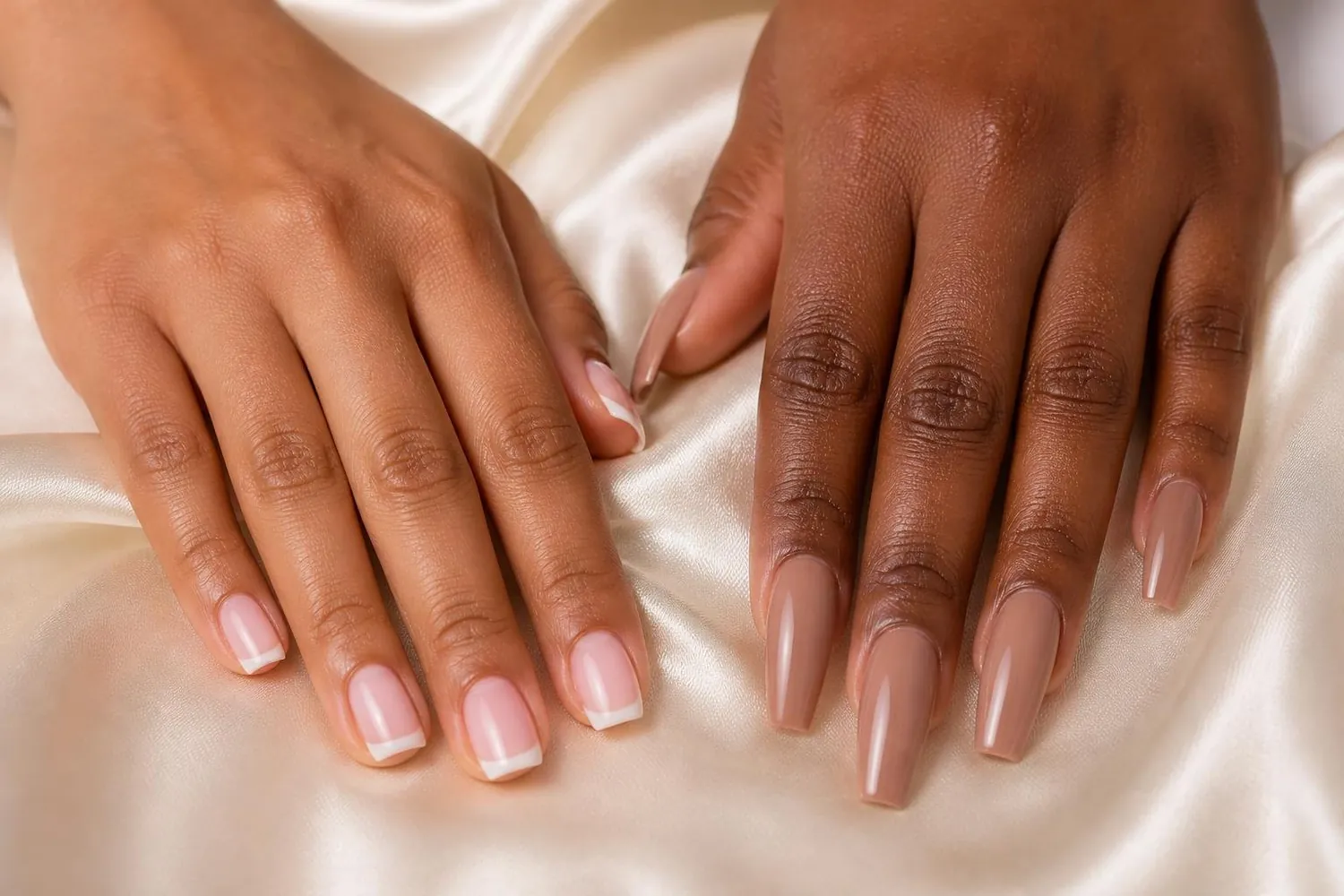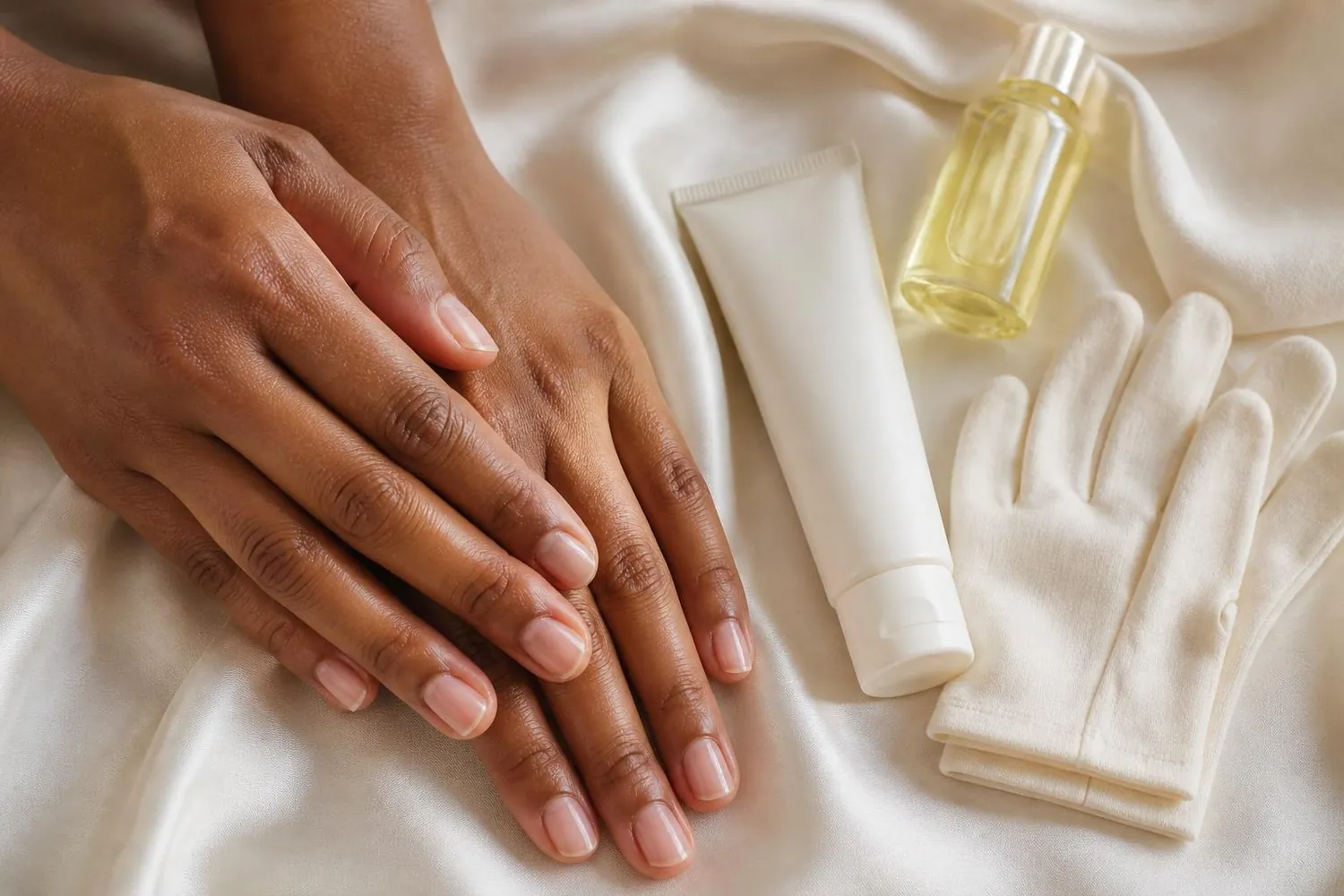
Healthy-looking nails come mostly from small, boring habits repeated often. A drop of oil before bed, gloves at the sink, a file instead of your teeth. None of it takes long, and together it does more for your nails than an occasional big salon session.
This routine is built around guidance from the American Academy of Dermatology, Mayo Clinic and other medical sources, translated into what you'd do on an ordinary Tuesday. It works with or without polish.
In this guide
Every day: the two-minute basics
Keep nails clean and dry
The AAD's first tip for healthy nails is to keep them clean and dry, because bacteria and fungi thrive in moisture. Wash your hands as usual, then dry them properly, including under the free edge and around the cuticles. Nails that stay damp for long stretches are more likely to soften, peel and pick up infections.
Moisturize after you wash
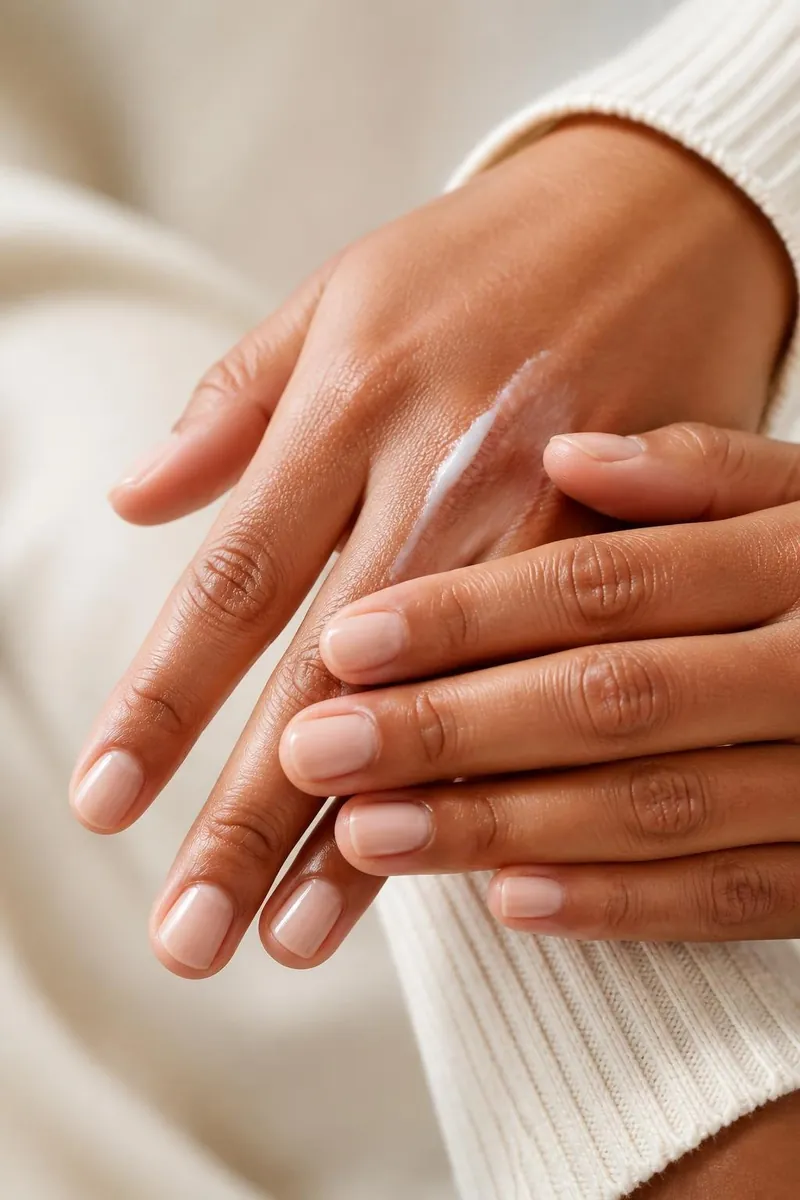
Every wash strips a little oil from the skin and nails. The AAD recommends moisturizing after washing your hands, and Mayo Clinic suggests rubbing moisturizer into your nails and cuticles as well as your hands. Keep a tube of hand cream by every sink you use regularly and one in your bag. It's the easiest habit on this list to automate.
Oil your cuticles at night
Before bed, massage cuticle oil, a cuticle cream or a thin layer of petroleum jelly into each nail base and over the nail plate. Cleveland Clinic suggests covering your hands in petroleum jelly or a similar occlusive product before sleep if your nails are brittle. Overnight, nothing washes it off, so a small amount goes a long way. For a full breakdown, see our cuticle care guide.
Use tools, not nails
Opening cans, scraping off stickers and prying lids are quick ways to chip, split or lift a nail, and the AAD lists using nails as tools among the habits to avoid. Keep a small coin or a butter knife handy for the jobs your nails keep volunteering for.
Around the house: protect your hands
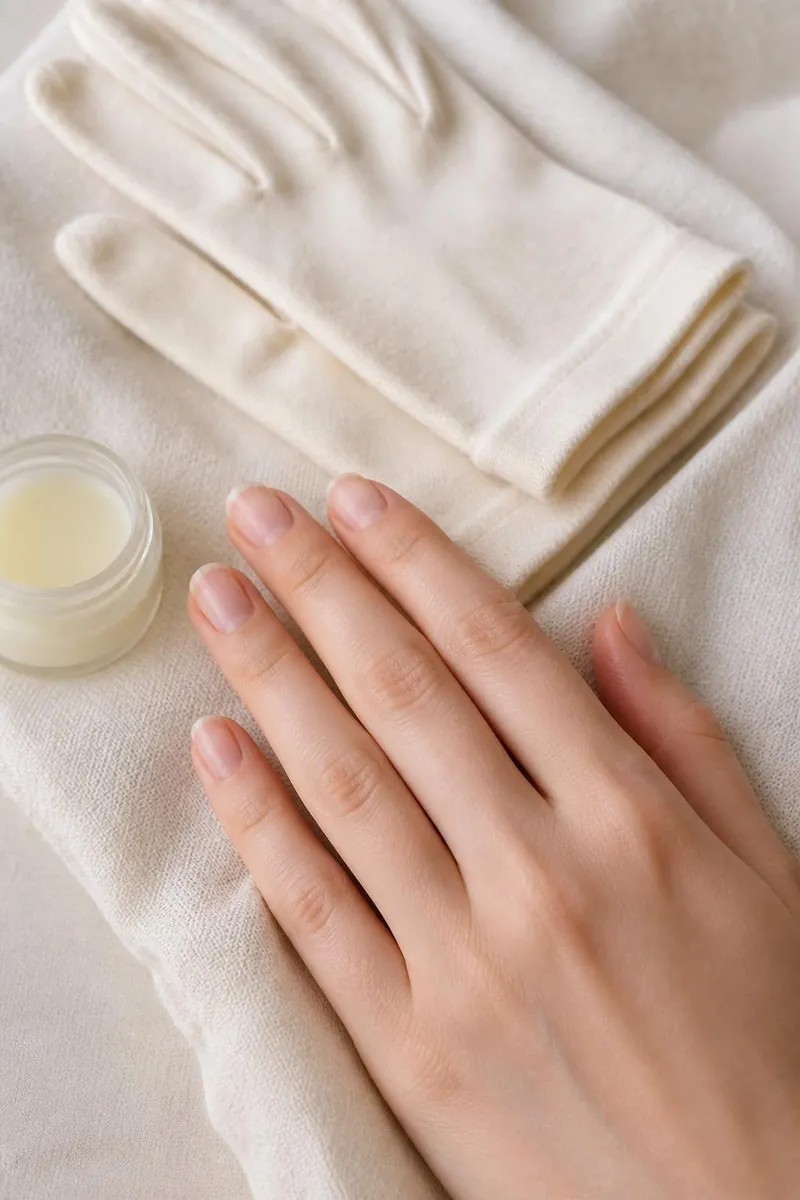
Water is harder on nails than most people realize. Dermatologist Dana Stern told NPR that the nail is a thousand times more absorptive of water than the skin. Repeated swelling and drying weakens it over time, which is one reason dishwashing hands so often peel at the tips. The AAD recommends gloves for dishes and cleaning.
- Cotton-lined rubber gloves for washing up and cleaning sprays
- Gardening gloves for soil and outdoor work
- Warm gloves outdoors in winter, when cold air dries skin quickly
- Lukewarm, not hot, water for hand washing when you have the choice
Every week: shape and tidy
Trim and file
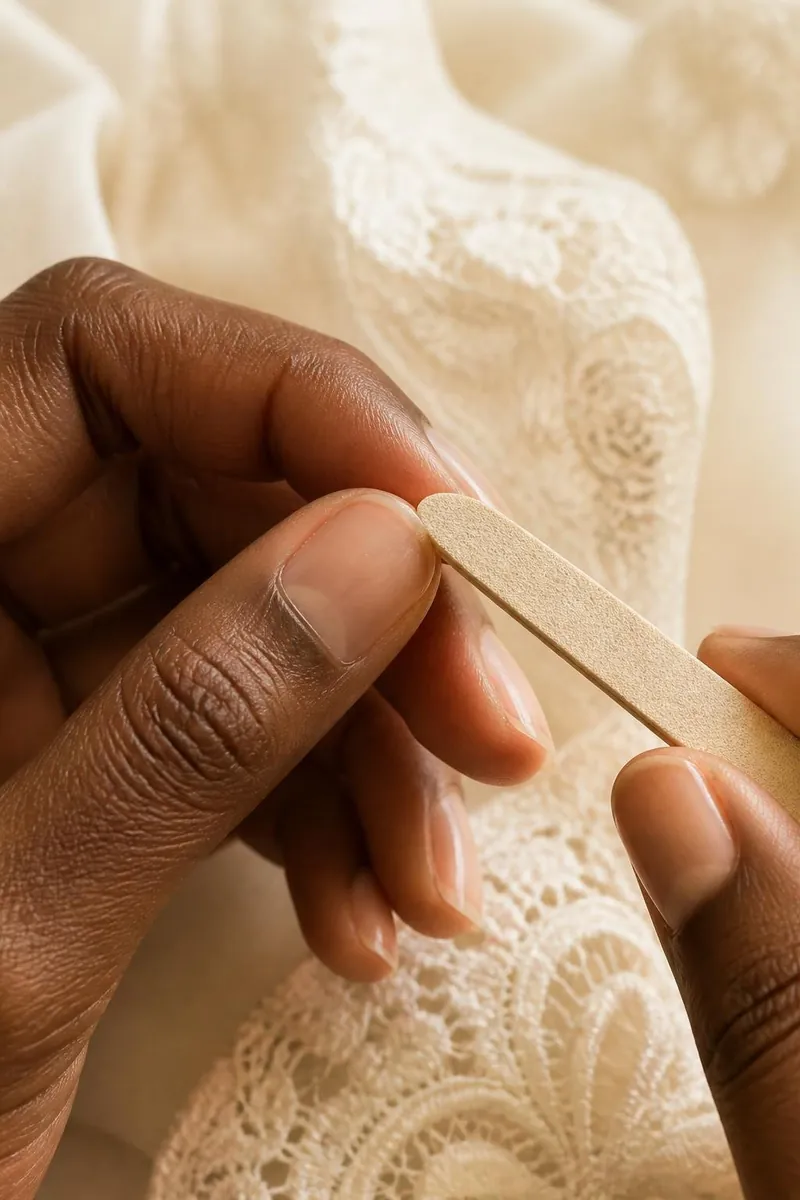
Once a week is enough for most people. The AAD suggests trimming after a shower or bath, when nails are softer, and cutting fingernails nearly straight across before rounding the corners slightly with a file. File in one direction rather than sawing back and forth, which the AAD says can weaken nails. A fine-grit file is kinder to natural nails than a coarse one. If you're deciding between types, our glass file vs. emery board comparison covers the differences.
Check in with your cuticles
Look for hangnails and dry patches. Trim only loose, torn bits of skin with clean clippers, never pull them, and leave the cuticle itself in place. The AAD advises against cutting cuticles because they protect the nail root.
Clean your tools
Wash clippers and metal files with soap and water, dry them well and store them somewhere dry. Replace emery boards when they're worn or grubby, since they can't really be cleaned.
Every few weeks: give polish a break
If you wear polish, gel or extensions most of the time, build in some bare weeks. Taking a break from manicures is one of the dermatologist tips in NPR's nail-health guide, and it gives you a chance to see what your nails actually look like underneath. Use the time for a gentle no-polish manicure, keep up the oil, and let the surface recover from removers and filing.
Mayo Clinic notes that a nail hardener might help strengthen nails for some people, so a clear strengthening coat is an option during a polish break. If you choose to buff for shine, keep it light and occasional. Dr. Stern told NPR that overdoing it can thin and weaken the nail plate.
At the salon
Salon visits can fit into this routine too. Mayo Clinic suggests choosing salons that display a current state license and working with licensed technicians. You can ask to skip cuticle cutting and to keep filing gentle, and it's reasonable to ask how tools are cleaned between clients. For low-maintenance color between visits, short, soft looks like the ones in our minimalist nail trends grow out gracefully.
Adjust for the seasons
Your routine doesn't need to stay identical all year. In winter, cold air outdoors and heating indoors pull moisture from skin, so cuticles crack and nail tips peel more easily. That's the time to switch from a light oil to a richer cream or balm at night, wear gloves outside and keep nails a little shorter so they're less likely to catch and split. In summer, the risks shift toward water: swimming, long showers and sweaty gloves. Dry your hands and nails thoroughly after the pool, keep up the hand cream after sunscreen-heavy days, and give extra attention to toenails, since the AAD recommends flip-flops at pools and public showers.
A simple weekly plan
- Daily: dry hands well, hand cream after washing, cuticle oil before bed, gloves for wet chores.
- Once a week: trim and file after a shower, check for hangnails, clean your tools.
- Every few weeks: spend a week or so with bare nails, and assess shape, color and texture.
When to see a dermatologist
Mayo Clinic describes healthy fingernails as smooth and evenly colored, without pits or grooves. Small cosmetic issues like peeling tips often improve with the habits above. Get changes that persist checked. The AAD notes that nail changes, swelling or pain can signal a problem, so see a board-certified dermatologist if you notice discoloration, changes in shape or thickness, a nail separating from the nail bed, or redness, swelling and tenderness around the nail. If you have diabetes or poor circulation, get any nail problem looked at promptly. Mayo Clinic also suggests asking a healthcare professional before starting supplements such as biotin for weak nails.
Small tools that help
You don't need much: a fine file, a cuticle oil you like and a hand cream. A few options to start with:
Products worth a look
CND
CND SolarOil Nail & Cuticle Care
A salon-favorite nail and cuticle oil in a polish-style bottle with a brush applicator. Retail listings describe it as a blend of…
Researched pickessie
essie Apricot Cuticle Oil
A quick-absorbing cuticle oil with apricot kernel oil and jojoba oil, applied with a brush. essie describes the formula as 97% natural…
Researched pickProducts worth a look
GERMANIKURE
GERMANIKURE Crystal Glass Nail File
A glass nail file handcrafted in the Czech Republic from thick Bohemian glass, with a filing surface chemically etched into the glass.…
Researched pickRevlon
Revlon Compact Emery Boards
Classic travel-size, double-sided emery boards. Revlon describes them as strong and flexible, with a coarser side for shaping and a finer side…
Researched pick