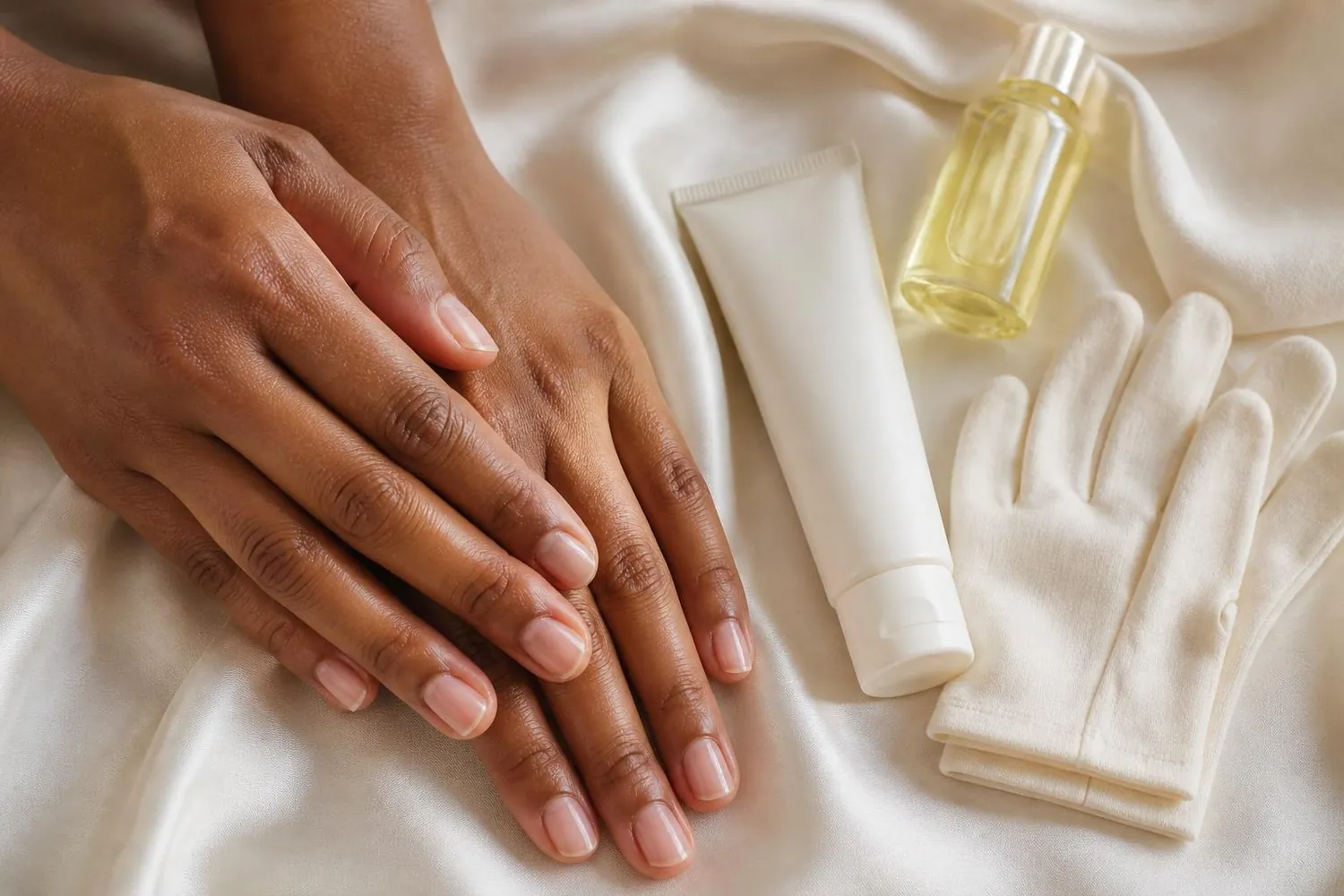
A no-polish manicure is the quiet version of a nail appointment: short, tidy nails, soft cuticles, a gentle sheen and nothing to chip. It's a good fit when your nails need a break from color or your job doesn't allow polish, or if you just like how clean, healthy-looking hands look.
The whole routine takes about twenty minutes at home and uses tools you probably already own. The aim is to look after the nail, so every step below leans gentle.
In this guide
Expected result
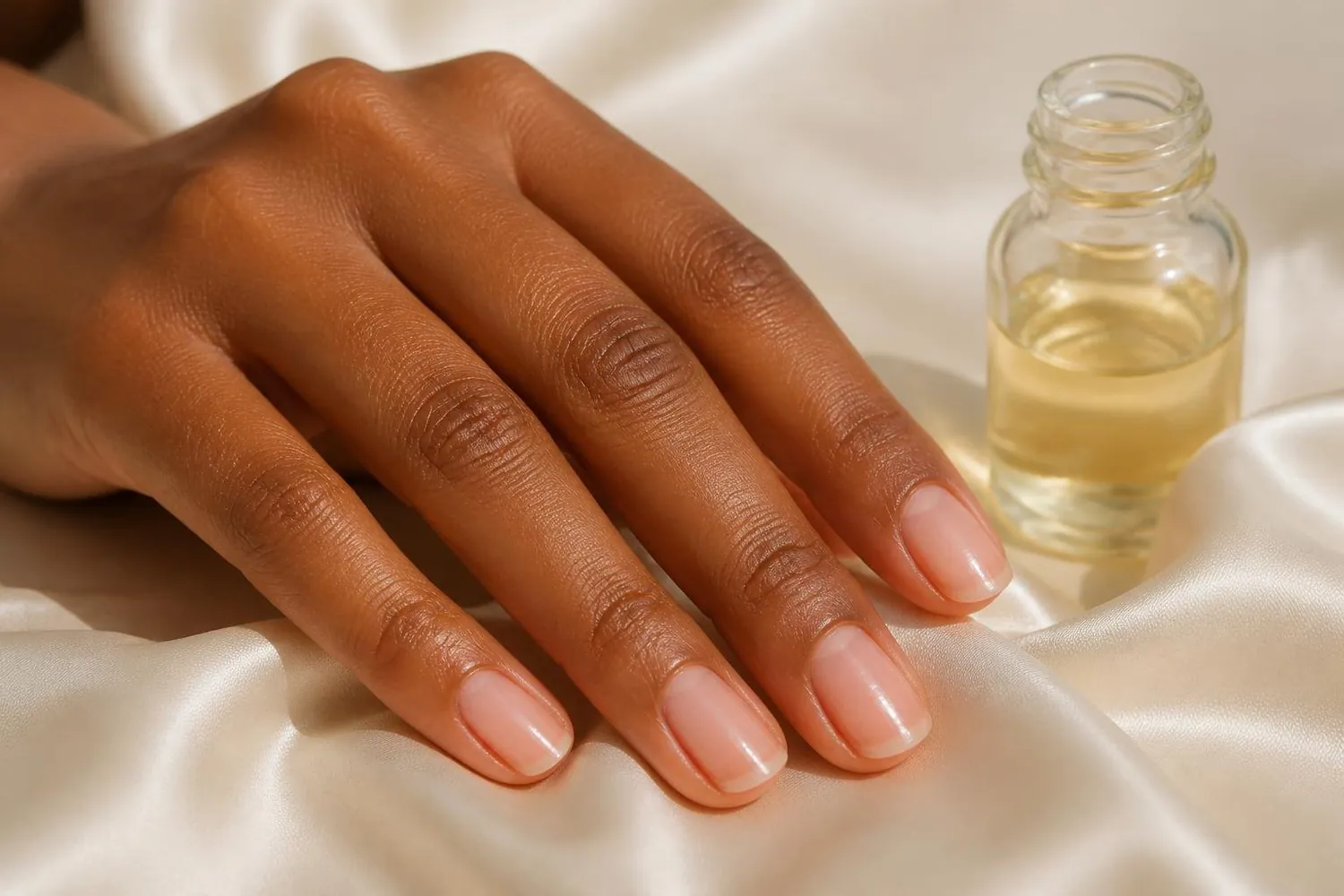
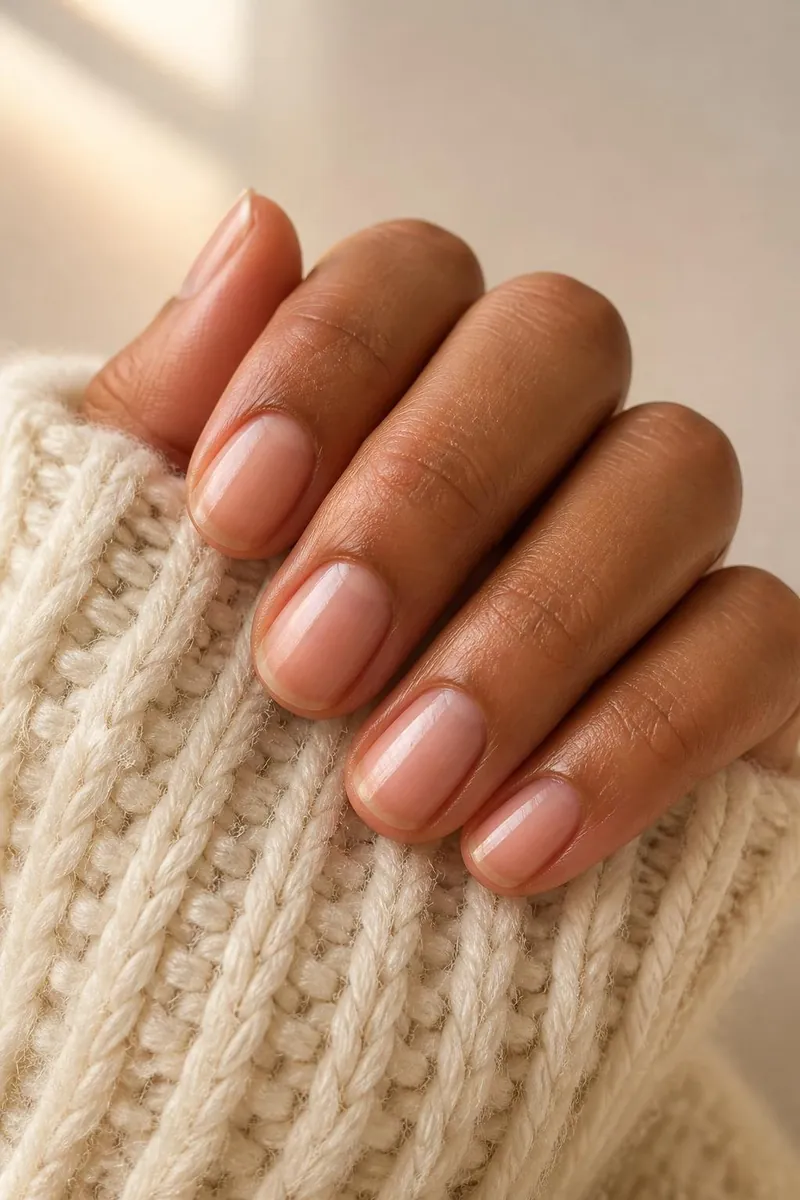
Expect nails that are even in length and shape, with smooth edges that don't snag on knitwear. Cuticles look neat and hydrated instead of ragged, and the nail surface has a soft natural shine. If you add the optional final coat, you'll get a little more gloss and a slightly smoother look over any fine ridges. One session won't make your nails noticeably stronger overnight; steady care over several weeks does far more.
What you'll need
- Nail clippers or small, sharp nail scissors
- A nail file: a fine-grit glass file or a fine emery board
- A small bowl of lukewarm water, or a shower right before you start
- A soft washcloth or towel
- A four-sided buffing block (you'll only use the gentlest sides)
- Cuticle oil, a cuticle cream or plain petroleum jelly
- Hand cream
- Optional: a ridge-filling base coat or a clear top coat
Not sure which file to buy? Our glass nail file vs. emery board guide walks through the trade-offs.
Step-by-step
Step 1: Clean and shape
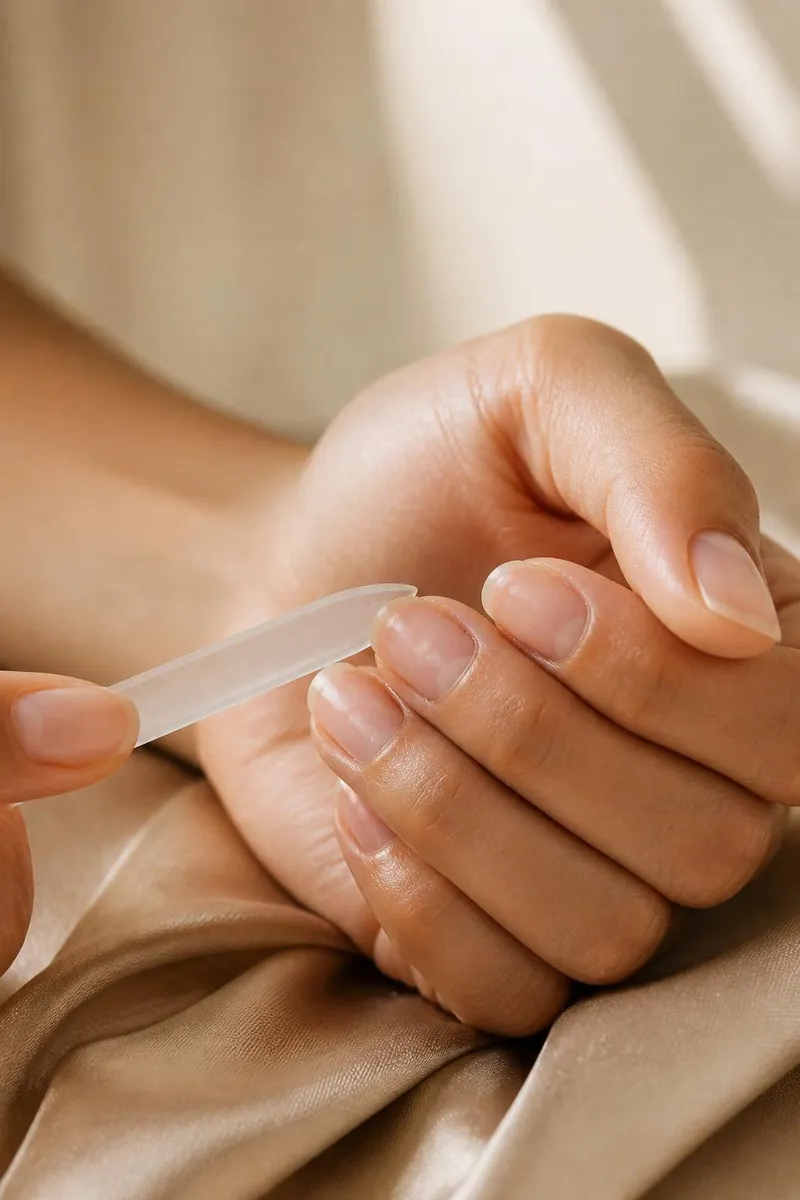
Start with clean, polish-free nails and wash your hands. The American Academy of Dermatology suggests trimming right after a bath or shower, when nails are softer, or soaking them in lukewarm water for a few minutes first. Clip fingernails nearly straight across, then round the corners slightly so they're less likely to catch.
Finish the shape with your file. Work from the side of the nail toward the center and lift the file between strokes. The AAD notes that filing back and forth can weaken nails, so keep it to one direction. A soft square or a gentle oval reads clean and polished at short lengths.
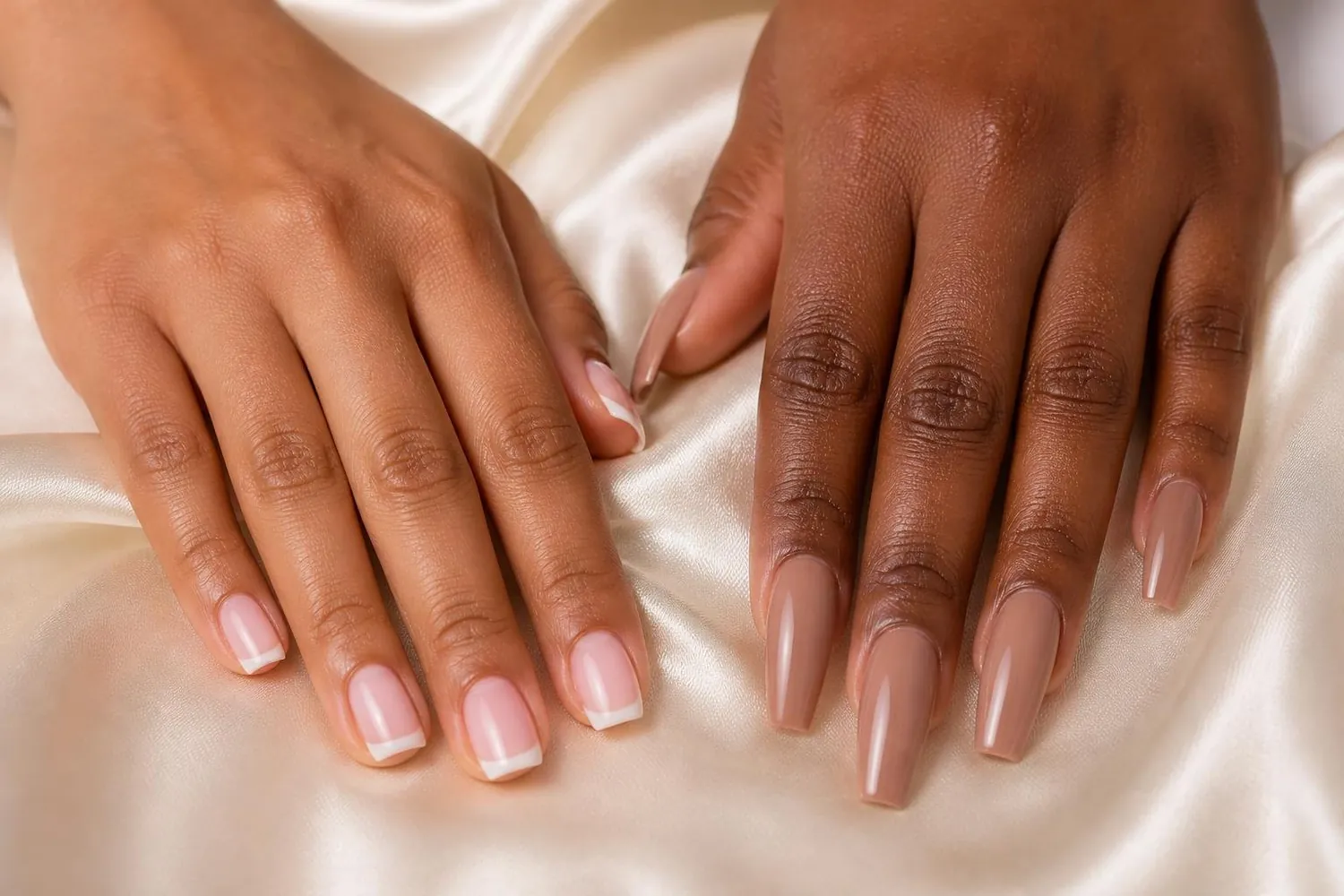
Choose the shape by looking at your nail beds and the way you use your hands. A squoval (square with softened corners) is sturdy and practical if you type a lot or work with your hands. An oval flatters wider nail beds and makes short fingers look a touch longer. Whatever you pick, match all ten nails before you move on, because evenness is what makes bare nails look intentional. Keep the free edge short for now. Natural nails without a protective coat are more prone to catching and splitting at longer lengths, and you can always let them grow once your routine is settled.
Step 2: Care for your cuticles gently
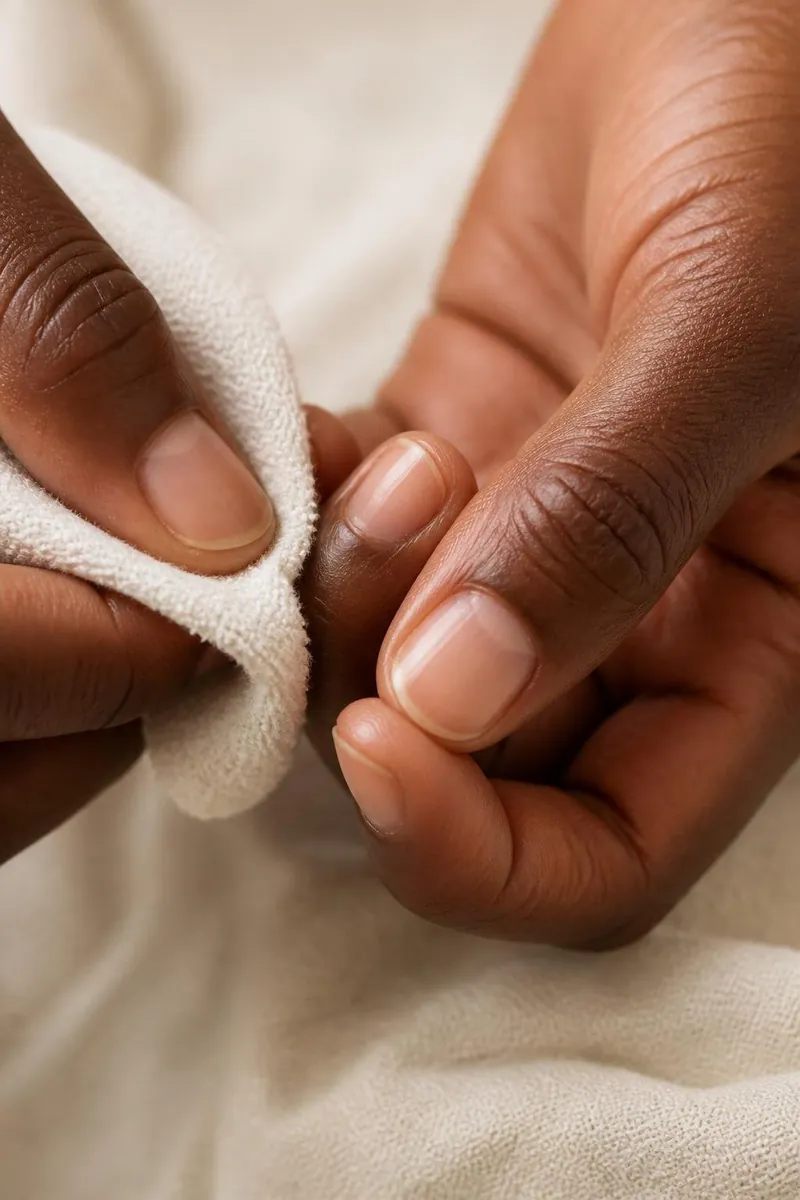
This is the step where a no-polish manicure differs most from a classic salon routine. The cuticle seals the base of the nail and helps protect the nail root, so dermatologists advise against cutting it. The AAD also says not to push cuticles back, while some dermatologists are comfortable with a very light nudge after a shower. If you want that tidier edge, wrap a fingertip in a soft washcloth and ease the skin back with almost no pressure. Skip metal tools and anything sharp.
Small, dry hangnails are the one thing worth trimming. Snip only the loose piece with clean clippers rather than pulling it. Our full guide to caring for your cuticles goes deeper.
Step 3: Buff lightly
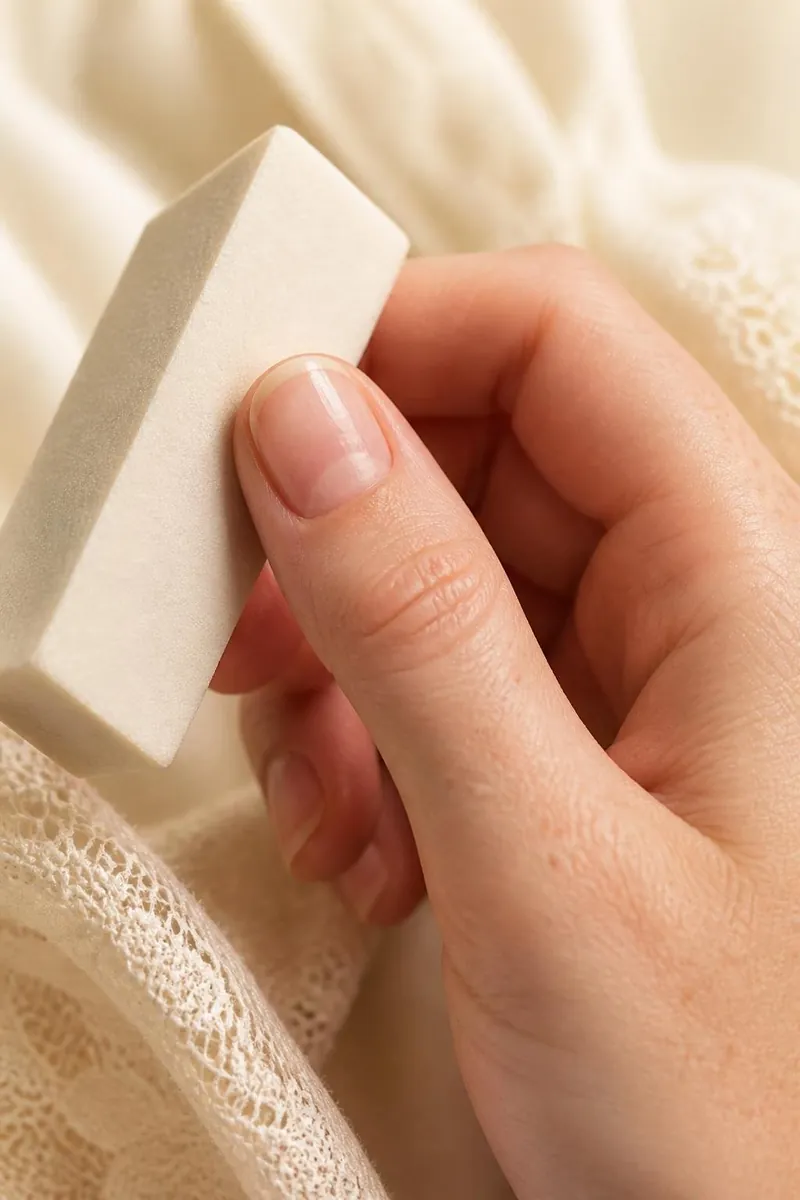
Buffing gives bare nails that glossy, just-done look, and it's also the step most people overdo. Each pass of a buffer removes a little of the nail surface. Dermatologist Dana Stern told NPR that light buffing is fine but that overdoing it can thin and weaken the nail plate. Use the smoothing and shining sides of a buffing block only, give each nail a few light strokes, and stop as soon as you see a soft sheen.
If your nails already feel thin, bendy or peel at the tips, skip this step entirely. A clear coat in step 5 gives shine without taking anything away.
Step 4: Moisturize
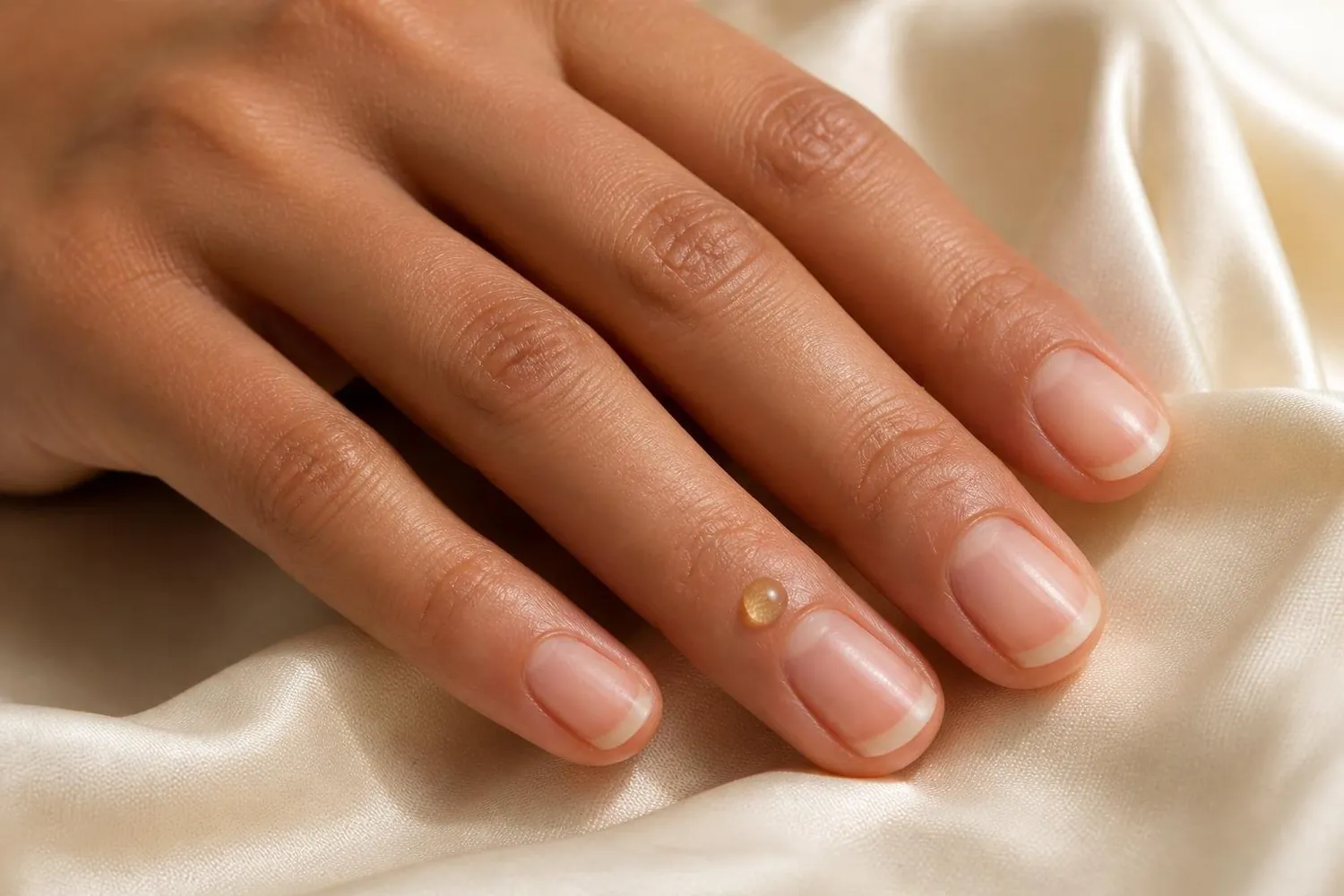
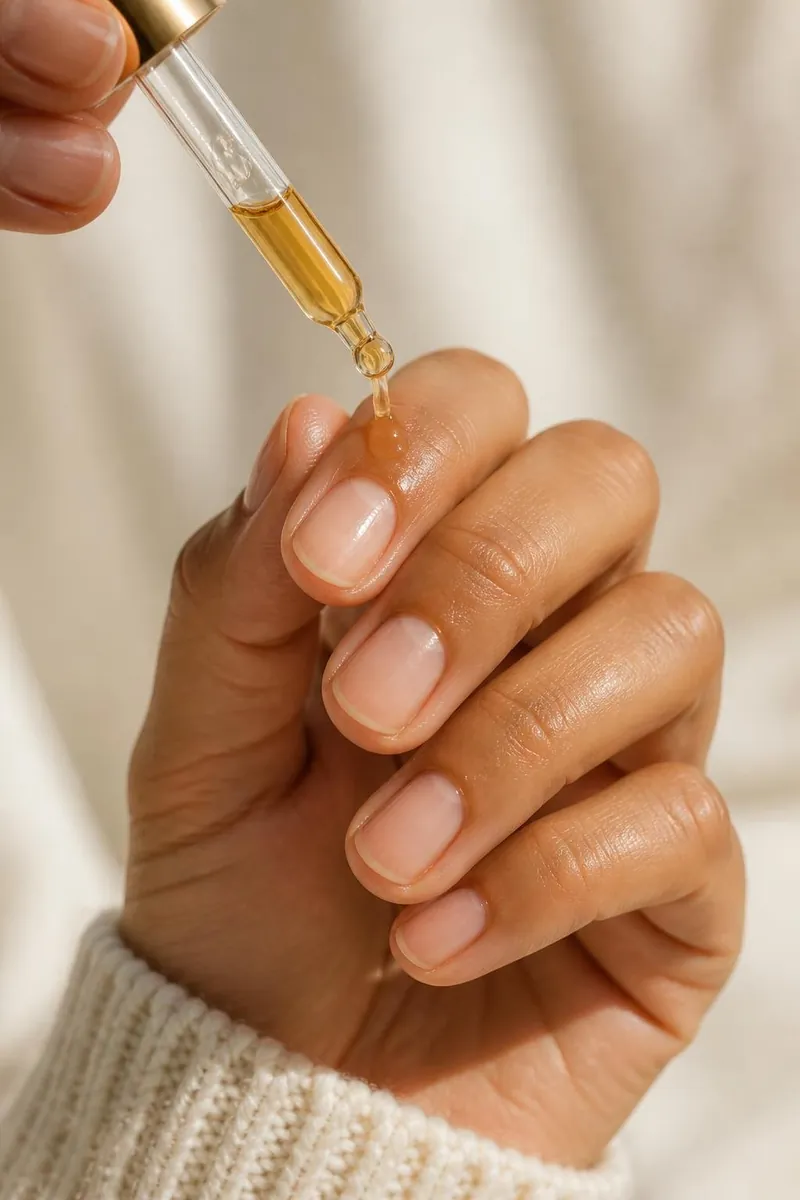
Massage a drop of cuticle oil into each cuticle and over the nail plate, then follow with hand cream. Mayo Clinic suggests rubbing moisturizer into your nails and cuticles, and the AAD recommends moisturizing after trimming because flexible nails are less likely to split. Petroleum jelly works well too, especially at night. The AAD lists it as an inexpensive option for nails and cuticles.
Give the oil a few minutes to sink in before the next step, then wipe the nail surface with a tissue. Oil left on the nail can stop a base or top coat from gripping.
Step 5: Optional ridge filler or clear coat
If you'd like a bit more polish without color, brush on one thin coat of a ridge-filling base coat or a clear top coat. A ridge filler is slightly thicker and blurs fine vertical lines, while a clear top coat simply adds shine. Keep the brush a hair away from the skin and let it dry fully. Swipe once down the center and once along each side, and seal the very tip by running the brush lightly along the free edge. A single thin layer looks more natural than two thick ones and dries faster. When it starts to wear, remove it with a gentle remover, then oil your nails and cuticles straight afterward, since removers are drying. You can skip this step entirely. Plenty of people prefer completely bare nails, and a well-buffed, well-oiled nail already looks finished.
Common mistakes
- Cutting the cuticle. It may look neat for a day, but removing it opens a route for germs and often leads to ragged regrowth and hangnails.
- Buffing every week. Buffing removes nail. Once every few weeks, lightly, is plenty for most people.
- Sawing back and forth with the file. File in one direction with gentle pressure and a fine grit.
- Filing wet nails hard. Softened nails are easy to clip, but keep filing light while they're still damp.
- Skipping moisture. Shape and shine fade quickly on dry, brittle nails. Oil and hand cream are what keep the look going.
- Painting over oil. If you add a clear coat, blot the nail first so it can grip.
Aftercare
A quick daily habit keeps a no-polish manicure looking fresh. Massage in cuticle oil or a little petroleum jelly before bed and use hand cream after washing your hands. The AAD recommends wearing gloves for dishes and cleaning, since repeated soaking weakens nails, and keeping nails clean and dry. Try not to use your nails as tools to open cans or peel off labels.
Touch up the shape with a few light file strokes when you notice a snag, and repeat the full routine every week or two. If you want to build these steps into your week, our everyday nail care routine breaks it down by day, and when you're ready for color again, a sheer milky nail keeps the same clean feel.
Good to know: If you notice changes in nail color or shape, pain, swelling, or a nail lifting from the nail bed, check in with a board-certified dermatologist rather than covering it up.
Relevant product options
A good cuticle oil does most of the work in this routine, and a fine file keeps edges smooth. A few options are below; see our best cuticle oils roundup for more detail.
Products worth a look
CND
CND SolarOil Nail & Cuticle Care
A salon-favorite nail and cuticle oil in a polish-style bottle with a brush applicator. Retail listings describe it as a blend of…
Researched pickessie
essie Apricot Cuticle Oil
A quick-absorbing cuticle oil with apricot kernel oil and jojoba oil, applied with a brush. essie describes the formula as 97% natural…
Researched pickBurt's Bees
Burt's Bees Lemon Butter Cuticle Cream
A small tin of solid cuticle cream that melts on contact with skin. Retailers describe it as made with sweet almond oil…
Researched pickProducts worth a look
GERMANIKURE
GERMANIKURE Crystal Glass Nail File
A glass nail file handcrafted in the Czech Republic from thick Bohemian glass, with a filing surface chemically etched into the glass.…
Researched pickRevlon
Revlon Compact Emery Boards
Classic travel-size, double-sided emery boards. Revlon describes them as strong and flexible, with a coarser side for shaping and a finer side…
Researched pick